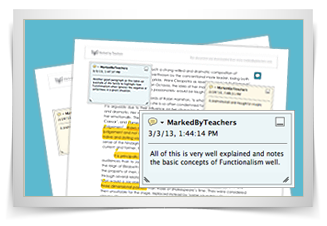
"Coursework.Info has provided an invaluable site for both myself and my students." Gill Burbridge, Central Sussex College
 

Salma Ahmed

English Lit. GCSE Student

168,000+ MODEL ESSAYS FOR LESS THAN 17P

For less than 17p a day, get instant access to winning model essays from a site trusted and recommended by Teachers. Now passing your exams is easier - simply study teacher vetted essays here.

Blitz through your revision and assignments by studying the work of the brightest students in UK - all for less than 17p a day (or £4.99 a month)!

  • Feel secure and in control - great student stress buster
  • Learn more, faster - instantly spot winning structures & ideas
  • Pass without cheating! Backed by anti-plagiarism experts
  • Only Teacher approved resource - widest choice of essays
  • Perfect for revision, essays or coursework - less than 17p!
Get started now ...

University Coursework


Most Popular University Essays

Want to know what everybody else is looking at? Here are some essays that have been the most popular choices of our University essays:

Title
Characterize of organic macromolecules, which are carbohydrates, protein, and lipid, that present food.
Vegetarianism is a groing trend right now with more and more people choosing it as their diet. Why?
Animals and heat loss.
Is there evidence of plant succession with the old abandoned quarry at Maddocks Hill?
To investigate the soil type found at selected sites on the South West facing hillside and identify the factors important in the formation of the soil types found at these selected sites.
Reproduction, sexual or asexual, is a means of survival of a particular species on the face of a planet. Angiosperms have many ways of reproducing themselves. It is of no surprise that the sex organs of a plant are in their flowers.
Heterosporous Plants

Most Recent University Essays

Looking for the most up to date essays? Here are some of the most recently added essays in our University category:

Title
To what extent is the west to blame for the failure of the global south to achieve economic growth?
Mary Queen of Martyrs
Exegetical Essay
Lab 4 Calorimetry
Current Issues in Strategic HRM - Ageism
Evaluating Opportunities for Revenue Management
Trusts Essay on Fiduciary Duties

University Explored

Studying for a Degree

Degree is a general term covering qualifications obtained from university, usually by students of 18 or older. The main types of first degrees are Bachelor of Arts (BA), Bachelor of Science(BSc) and various types of Bachelor of Medicine (MB) degrees for doctors and surgeons. A list of subjects studied for BA and BSc degrees would fill this page and several more. You can take single subjects e.g. geography, combine two or more e.g. politics, philosophy and economics or even build your own course by selecting modules. You'll need to do some more research to find the course that fits your needs best.


A full first degree takes around three years of study, but language students, trainee doctors and those on vocational courses will often have a year abroad or on work experience. Foundation degrees are two year courses, usually work-related, that count as two-thirds of a full degree. You can finish the third year later on if you want. There is also the option of earning a degree through part-time study and/or by studying at home. Check out the Open University for more about this.


Minimum requirement for entry on to a degree course is usually two A Level passes. Mature applicants may be able to get in if they have relevant experience, or you can take an access course to demonstrate your abilities. If you want to do a popular degree at Oxford or Cambridge you'd better get revising - three or four A*s are often needed.

Why Study For a Degree?

Some professions like teaching, architecture and the law only take people with degrees (often only after further study). Lots of employers specify graduate level education in their job ads. A good degree in the right subject will increase your earning potential greatly. Some people do one just because they love their subject and want to learn more. If that's not enough University is also a great place for parties and meeting girls!

Degrees: What Will I Study?

Choosing which degree course can be tricky, not only do you have to decide what to study, but where to do it. Each university's idea of a history degree will be slightly different. You'll need to have a realistic idea of your likely A Level grades, a stack of prospectuses from lots of universities and some good advice from your careers advisor. Some degrees are directly job related like law, accountancy or medicine, others are more general, but can still impress an employer if you're not set on a particular career yet.


Degree courses allow you to focus on areas of your subject that particularly interest you. You'll have to select options as you study and research and write a dissertation on a topic that you choose. Your final grade will be decided by a mixture of coursework and exams.

Degrees... What Comes Next?

There's the PGCE and law conversion courses that will let you work as a teacher or solicitor. MA or MSc courses allow you to delve deeper into your subject, and then there's the PhD that means you can call yourself doctor.

External links to more information about degrees.

http://www.ucas.com/students/beforeyouapply/higher_education_explained/


http://www.direct.gov.uk/en/EducationAndLearning/QualificationsExplained/DG_10039021


http://www.connexions-direct.com/


http://www.thebigchoice.com/Careers/A_Levels/Choosing_the_right_degree.html

Recent Reviews of University Essays

What our users think of the University essays in this section:

"Very helpful"
tuttu
"Good example for my reflective report"
abram708
"excellent"
leon1995
"Excellent, straight foward."
luzmarina
"Well argued. Very fluent use of legal knowledge and well structured. Well Done!"
mjanstey